
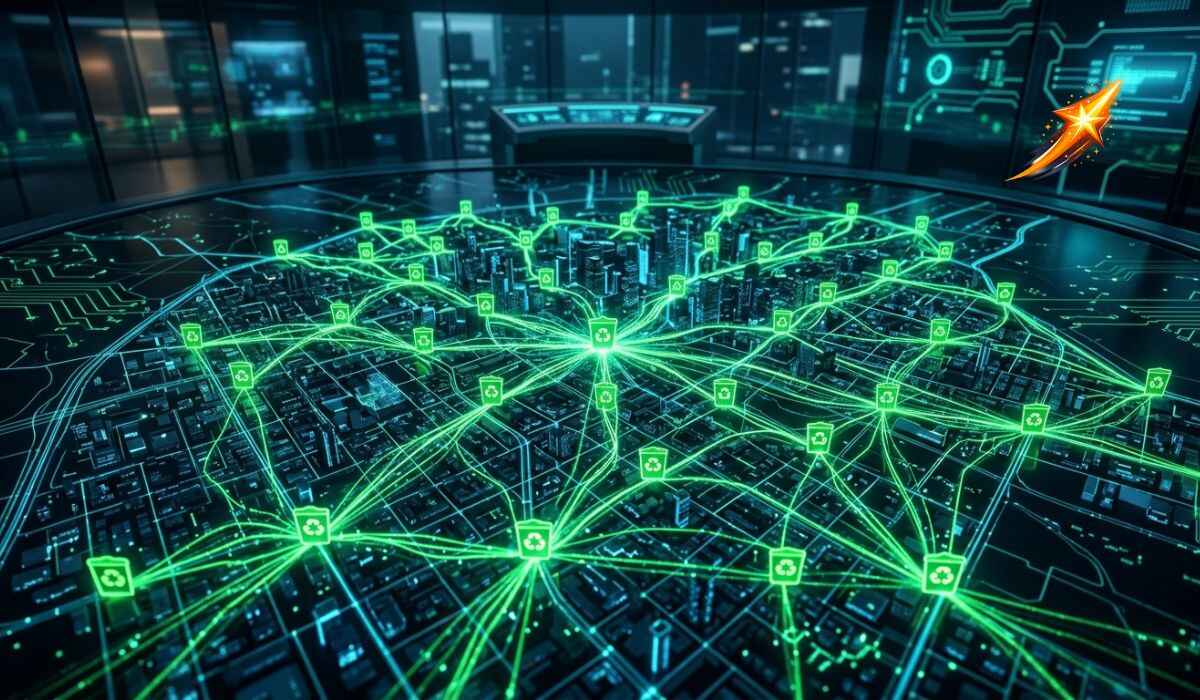
Matarecycler: Complete Guide to the AI-Powered Smart Recycling Platform
Matarecycler is a technology-driven recycling platform that combines artificial intelligence, IoT-enabled smart bins, blockchain traceability, and a gamified mobile app to make waste sorting smarter, more accurate, and more rewarding for individuals, households, businesses, and municipalities.
Unlike traditional recycling systems that rely on manual sorting, confusing public bins, and inconsistent public participation, Matarecycler addresses the three biggest failures of conventional waste management simultaneously: contamination caused by incorrect sorting, inefficient collection that wastes fuel and resources, and low participation driven by a lack of incentives.
This complete guide covers everything you need to know about how Matarecycler works, its key features, who it serves, and why it represents a fundamental shift in how communities approach sustainable waste management.
What Is Matarecycler?
| Detail | Information |
|---|---|
| Full Name | Matarecycler (also styled as MataRecycler) |
| Type | Smart Recycling and Waste Management Platform |
| Core Technology | AI, Machine Learning, IoT Sensors, Blockchain |
| Primary Interface | Mobile App and Web Portal |
| Users Served | Individuals, households, businesses, municipalities |
| Key Features | AI sorting, smart bins, rewards, blockchain tracking |
| Sorting Speed | 80 to 120 picks per minute |
| AI Sorting Accuracy | Over 95 percent in optimized deployments |
| Contamination Reduction | Up to 90 percent in some systems |
Matarecycler is a digital-first recycling solution designed to make waste management smarter, faster, and more efficient. The platform integrates artificial intelligence, machine learning, IoT-enabled smart bins, and blockchain-backed transparency to identify, sort, track, and reward recycling activities.
Unlike isolated apps or basic smart bins, Matarecycler is a full circular economy ecosystem connecting individual users, households, businesses, and municipalities through a unified network of AI-powered bins, real-time analytics, and a gamified mobile application.
The Problem Matarecycler Was Built to Solve
Before appreciating the full value of Matarecycler, it is important to understand why conventional recycling systems consistently fail.
Globally, the amount of solid waste generated each year is increasing rapidly, placing tremendous strain on landfills and recycling infrastructure. Conventional recycling systems rely heavily on manual sorting and inconsistent public participation, leading to high contamination rates where recyclable materials are incorrectly disposed of and rendered unusable.
The three core failures of traditional recycling are:
Contamination from incorrect sorting, where a single non-recyclable item placed in the wrong bin can render an entire batch of recyclables unprocessable and destined for landfill.
Inefficient collection where waste vehicles follow fixed schedules regardless of actual bin fill levels, wasting fuel, increasing emissions, and creating overflow at some locations while collecting near-empty bins elsewhere.
Low participation driven by confusion about what can be recycled, a lack of visible feedback about the impact of individual actions, and no personal incentive to maintain consistent recycling habits.
Matarecycler addresses all three simultaneously through technology and community design rather than asking people to simply try harder with an unchanged system.
How Matarecycler Works: Step by Step
The Matarecycler process follows a clear, interconnected flow from waste deposit to final material tracing.
Step 1: Onboarding and Setup
Download the Matarecycler app or access the web portal. Create an account, input your location, and connect any IoT devices such as smart bins. The system uses geolocation to tailor sorting advice to your local recycling rules, which vary significantly between cities and regions.
Step 2: Waste Identification
When a user deposits waste into a Matarecycler-enabled smart bin, high-resolution cameras and sensors scan the items and use AI to identify the material type. The system uses computer vision to see items in the same way a human eye does, but at machine speed.
The AI engine can automatically distinguish among plastic, paper, metal, glass, cardboard, and organic waste. This automatic identification significantly reduces human error and prevents contamination that often renders recyclable materials unusable.
Step 3: Automated Sorting
Once a material is identified, the system routes it to the appropriate processing stream. High-speed mechanical arms move the item into the correct container. The machine can make 80 to 120 picks per minute, compared to 30 to 40 for a human sorter in the same timeframe.
This speed prevents backlog at sorting centers and ensures that recyclables are processed correctly from the moment of deposit rather than being re-sorted or rejected downstream.
Step 4: Real-Time Data and Notifications
Smart bins communicate fill levels in real time, allowing waste collection services to optimize pickup schedules, reduce fuel usage, and lower emissions. You receive a notification on your phone once your item is sorted, confirming that it has been processed correctly.
All collected data is sent to municipal dashboards and user accounts, creating full transparency about recycling activity at the individual, building, neighborhood, and city level.
Step 5: Blockchain Traceability
For maximum accountability, Matarecycler integrates blockchain technology to create an immutable record of every recyclable item’s journey from the bin to the processing facility to the new product. Users can follow their recycled bottle from the bin through the processing facility to the raw material stage.
This kind of transparent recycling builds trust and encourages ongoing participation by making the environmental impact of each individual action visible and verifiable.
Step 6: Rewards and Recognition
Users receive MataPoints, which are digital credits earned for correct recycling behavior. These can be redeemed for discounts, donations to environmental causes, or other benefits. The personal dashboard displays recycling history, CO2 offset, MataPoints earned, and comparisons to community averages.
Key Features of Matarecycler
AI-Powered Waste Sorting
The artificial intelligence engine is the core of the Matarecycler platform. It identifies plastic, paper, metal, glass, cardboard, and organic materials with over 95 percent accuracy in optimized deployments. Machine learning enhances this by continually improving recognition through user input and feedback, so the system becomes more accurate over time as it processes more data.
IoT-Enabled Smart Bins
Matarecycler smart bins are connected devices equipped with sensors, cameras, and wireless communication capabilities. They monitor fill levels in real time and simultaneously transmit data to both waste management services and user apps. Compact versions work for individual homeowners while scaled systems serve apartment buildings, offices, schools, and entire municipal districts.
Gamified Mobile App
The mobile app is the primary user-facing interface for Matarecycler. It features large, easy-to-read icons and supports multiple languages. Voice-assisted commands help elderly or visually impaired users navigate features with ease.
The gamification element transforms recycling from a chore into a rewarding activity. Users earn eco-points and digital credits when they recycle correctly. Neighborhoods, schools, and businesses can compete on leaderboards for public recognition. Milestone notifications ensure recycling remains a consistent daily habit rather than an occasional effort.
Blockchain Transparency
The blockchain integration provides complete transparency about where recyclables go after collection. Every material is tracked from the bin, through the processing facility, to its final destination as a reusable raw material. This feature addresses the skepticism many people feel about whether their recycling efforts actually result in materials being recycled rather than landfilled.
Data Analytics Dashboard
Matarecycler provides both individual and municipal analytics tools. Individual dashboards show personal recycling history and environmental impact. Municipal dashboards help city teams identify high and low-performing areas, optimize collection routes, and design more effective waste policies.
Who Uses Matarecycler?
Individual Households
For everyday users, Matarecycler acts as a personal recycling assistant. Instead of guessing which bin to use, users get real-time guidance in the app. The rewards system provides personal motivation to maintain consistent recycling behavior over time.
Apartment Buildings and Property Managers
Multi-unit residential buildings benefit from smart bins that centralize recycling management across many households. Property managers receive data about building-wide recycling performance and can identify which areas or floors need better sorting education.
Schools and Universities
Cafeterias can efficiently separate food waste from packaging. Classrooms can manage paper better. Beyond operational improvements, Matarecycler teaches students how waste systems work in real life. When recycling becomes part of daily school routine, students carry those habits outside school as well.
Businesses and Corporate Offices
Commercial premises generate predictable waste streams that benefit significantly from automated sorting. Matarecycler helps businesses meet corporate sustainability targets, reduce waste disposal costs, and provide verifiable data for environmental reporting.
Municipalities and City Governments
Cities using Matarecycler gain actionable data about waste generation patterns across different districts. One area may have high levels of plastic contamination in paper bins, requiring targeted public education. Another area may need more glass collection points. Smart fill-level monitoring eliminates inefficient fixed-schedule collection and replaces it with demand-driven pickup, saving fuel and reducing carbon emissions.
Matarecycler vs Conventional Recycling
| Feature | Matarecycler | Conventional Recycling |
|---|---|---|
| Sorting Method | AI automated, over 95 percent accuracy | Manual, high human error rate |
| Contamination Rate | Reduced by up to 90 percent | High, often renders batches unusable |
| Collection Efficiency | Demand-driven based on real-time fill levels | Fixed schedule regardless of fill level |
| User Guidance | Real-time app guidance for every item | Static bin labels, often unclear |
| Participation Incentive | Rewards, points, leaderboards | No personal incentive |
| Traceability | Blockchain-verified from bin to factory | Opaque, no individual tracking |
| Data Available | Full analytics for users and municipalities | Limited or no data transparency |
| Sorting Speed | 80 to 120 picks per minute | 30 to 40 picks per minute |
Environmental Impact of Matarecycler
The environmental benefits of Matarecycler extend across multiple dimensions of sustainability.
Landfill reduction is the most direct impact. By catching materials that would otherwise slip through the cracks in contaminated batches, Matarecycler directly reduces the volume of waste heading to landfills. Higher recovery rates mean more plastics turned into new packaging, more paper saved from being cut from trees, and more metals kept in circulation.
Carbon emissions are reduced through optimized collection routes. When waste vehicles travel only to bins that actually need emptying, fuel consumption and associated carbon emissions drop significantly compared to fixed-schedule collection, which services every bin regardless of fill level.
Circular economy contribution is achieved when recovered materials are sold to manufacturers as quality raw material inputs. Correctly sorted, uncontaminated recyclables have real commercial value that returns economic benefit to the recycling ecosystem.
Behavior change at scale occurs when individuals see their personal impact through the dashboard and receive rewards for consistent recycling. Behavioral change is often cited as the most difficult element of sustainability transitions. Matarecycler’s gamification and transparency tools address this directly.
Materials Matarecycler Handles
Matarecycler’s AI sorting system is designed to recognize and correctly route the following material categories:
Plastics including PET bottles, HDPE containers, film packaging, and hard plastic items across multiple resin codes.
Paper and cardboard including newspapers, magazines, cardboard boxes, and office paper.
Glass including bottles and jars across different colors.
Metals including aluminum cans, steel tins, and foil packaging.
Organic and food waste where available, routed to composting or energy-from-waste streams.
Electronic waste at designated smart bin locations equipped to handle e-waste.
Matarecycler for Sustainable Urban Living
Smart cities are increasingly adopting integrated waste management solutions as part of their sustainability mandates. Matarecycler positions itself as a foundational layer of smart urban infrastructure alongside energy management, water monitoring, and public transport optimization.
For residents of dense urban areas where recycling compliance is often low due to confusion and inconvenience, Matarecycler removes the barriers that prevent good intentions from translating into correct behavior. The app eliminates the need to memorize local recycling rules. The smart bin eliminates the need to manually sort before depositing. The rewards system eliminates the feeling that individual actions do not matter.
The platform provides a practical model for sustainable urban living that feels achievable rather than aspirational, making it equally relevant to sustainability advocates and to ordinary people who simply want to do the right thing without spending extra effort.
The Future of Matarecycler
The platform plans to integrate more advanced machine learning into waste sorting, which will make the AI even better at identifying materials and detecting contamination as the system learns from millions of data points across a growing network of smart bins.
Blockchain-based tracking is being expanded to provide complete transparency into the material journey from bin to final product, allowing users to see where specific recyclables end up and which manufacturers use the recovered materials.
Global expansion is a stated goal, with the service currently operating in select areas and working toward broader municipal partnerships that can bring the full platform to more communities.
Frequently Asked Questions About Matarecycler
What is Matarecycler?
Matarecycler is a smart recycling platform that uses artificial intelligence, IoT sensors, a gamified mobile app, and blockchain traceability to automate waste sorting, optimize collection, and reward users for correct recycling behavior. It serves individuals, businesses, schools, and municipalities.
How does Matarecycler sort waste?
When a user deposits waste into a Matarecycler smart bin, high-resolution cameras and sensors scan the item and AI identifies the material type. The system then routes the item to the correct processing stream using automated sorting arms that make 80 to 120 picks per minute.
Is Matarecycler accurate?
Yes. Matarecycler achieves over 95 percent sorting accuracy in optimized deployments and can reduce contamination by up to 90 percent compared to conventional manual sorting systems.
What rewards does Matarecycler offer?
Users earn MataPoints, which are digital credits redeemable for discounts, donations to environmental causes, and other benefits. The app also features leaderboards, milestone notifications, and community challenges to maintain engagement.
Does Matarecycler use blockchain?
Yes. Matarecycler integrates blockchain technology to create an immutable and transparent record of every recyclable item’s journey from the bin to the processing facility and beyond. This gives users verifiable proof that their recycled materials are actually being processed.
Can Matarecycler work for a single household?
Yes. Compact smart bin versions are designed for individual homeowners and households. Larger scaled systems serve apartment buildings, offices, schools, and entire municipal districts.
How does Matarecycler help cities?
Municipalities gain real-time fill-level data for optimized collection scheduling, district-level performance analytics, contamination hotspot identification, and policy design support through the platform’s analytics dashboard.
What materials does Matarecycler sort?
The platform handles plastics, paper, cardboard, glass, metals, organic waste, and electronic waste depending on the specific deployment and local infrastructure available.
Visit: Domikyo.com: Complete Guide to the Blog, Topics, Guest Posts and What You Will Find





One Comment